
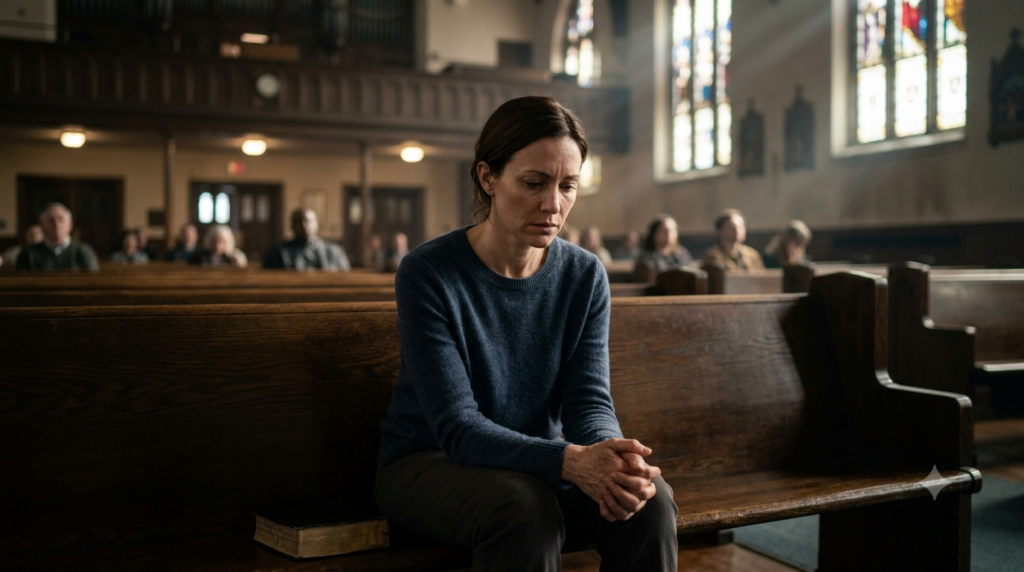
A hospital corridor. An empty chair at dinner. A phone call that divides your life into before and after.
That is where the question of why God allows suffering gets real. It stops being a debate for people with comfortable chairs and becomes a cry from somebody trying to make it through the night.
If God is good, why did He allow this? Is He cruel? Is He listening?
Those questions deserve more than a bumper sticker. Telling a grieving person that everything happens for a reason can sound like explaining the architecture of a house while they are still standing in the ashes.
Christian faith offers reasons for hope, but it does not hand us a private explanation for every tragedy. These five biblical perspectives help us think honestly about suffering without pretending we know everything God knows.
Before the Five Reasons: Your Pain Is Not Proof of God’s Rejection
The Bible begins with creation described as good and goes on to describe a world fractured by human rebellion. That is the broad Christian account of why things are broken. It is not permission to blame a sick child, an abuse survivor, or a grieving parent for what happened to them.
In John 9:1–3, Jesus rejects His disciples’ assumption that a man’s blindness must have resulted from his sin or his parents’ sin. The book of Job also challenges the easy equation that good people prosper and suffering people must have done something wrong.
Before you try to explain someone’s pain, make sure you are not adding to it. Sometimes the most faithful thing you can offer is a chair pulled close, a meal delivered, or a quiet promise to stay.
1. Human Freedom Can Be Used to Cause Real Harm
Some suffering has an identifiable human cause. An abuser chooses control. A driver chooses to get behind the wheel drunk. A leader chooses violence. The people who pay for those choices are often the people who had no say in them.
Scripture treats human decisions as morally significant. Deuteronomy 30:15–20 presents Israel with a call to choose life and faithfulness. Choices matter because people matter.
Many Christians understand meaningful human freedom as part of the explanation for why God permits wrongdoing. Christians differ over how freedom and God’s sovereignty fit together, but the responsibility for abuse belongs to the abuser. Faith must never be used to move that responsibility onto the victim.
This perspective explains something about human cruelty. It does not explain every cancer diagnosis, earthquake, or childhood illness. We should say that plainly instead of forcing every tragedy into the same box.
And allowing people to make choices does not mean approving every choice they make. The Bible repeatedly calls people to defend the vulnerable and do justice. Trusting God includes resisting evil, protecting people, and seeking accountability.
Your response: If someone is being harmed, begin with protection and practical help. Enduring abuse is not a requirement for proving your faith. Get to safety and involve trustworthy support.
2. God Can Grow Perseverance Through Hardship
Resistance can build strength. That image makes sense in a gym. It needs more care in a hospital room.
We cannot tell somebody their child died because God needed to teach them a lesson. We do not have that explanation. What we can say is that suffering does not put a person beyond God’s ability to sustain and shape them.
In Romans 5:1–5, Paul connects tribulation, perseverance, character, and hope. He writes about hope grounded in God’s love. He does not tell us to manufacture pain or pretend it feels good.
You may know someone whose hardship has made them especially patient with others. They listen differently because they remember what it was like when nobody listened. Their scars have made room for compassion.
That does not mean the harm was good. It means good can grow where harm once had the loudest voice.
Growth is not automatic, and recovery is not a competition. Some seasons leave people exhausted, traumatized, or in need of professional care. Needing treatment, rest, or help is not evidence that you failed God’s training program.
Your response: Ask a smaller question than “How am I supposed to become stronger?” Try, “What would faithfulness look like today?” It might mean keeping an appointment, answering a friend’s call, or praying one honest sentence.
3. Suffering Can Expose What Needs Attention
A smoke alarm is useful because it tells you something needs attention. But nobody stands in a burning house thanking the alarm while refusing to leave.
Some pain functions like that alarm. A broken relationship may expose a pattern that needs to change. Exhaustion may reveal that your pace is unsustainable. Loneliness may push you to reach for community.
That is a possible response to suffering, not a complete explanation for it. Chronic pain, grief, and trauma are not simple messages with one hidden lesson. We should never tell every hurting person that God caused their pain to get their attention.
The Psalms give us a better starting place: honest lament. In Psalm 13, the writer brings his sense of abandonment directly to God. He does not polish the ache into a church-approved sound bite.
You can say, “This hurts.” You can say, “I do not understand.” You can ask for help without first explaining why you need it.
Your response: Take the need seriously. Seek medical care for physical symptoms, qualified mental health support when needed, and trustworthy people who will walk with you. Prayer belongs alongside practical care.
A smoke alarm calls for a response. So does a person who says they are not okay.
4. God Meets Us in the Suffering of Jesus
Christianity does not picture God as a spectator who has never entered human sorrow. It points us to Jesus.
He knew rejection, betrayal, physical agony, and grief. At Lazarus’s tomb, He wept. In Gethsemane, He prayed in anguish. At the cross, He endured the violence of the people He came to save.
Hebrews 4:14–16 invites believers to approach God for mercy because Jesus understands human weakness. Your grief does not make you an interruption to Him.
The cross does not answer every question about why a particular tragedy happened. It does tell us that God’s response to evil includes entering our broken world and bearing its cost.
Do not turn that comfort into a comparison: “Jesus suffered more, so stop crying.” Jesus’s suffering is a reason to draw near to Him, not a reason to minimize your own.
And do not turn the resurrection into a formula promising that every loss will be reversed in this life. Christian hope is bigger than a guaranteed recovery date, a replacement relationship, or a financial comeback.
Your response: Bring your actual pain into your prayer life. You do not need to present a stronger version of yourself before you come to Christ.
5. Suffering Will Not Have the Final Word
Imagine stopping a story at its darkest chapter and calling that the ending. That is an incomplete reading. But telling somebody in that chapter to cheer up would still be cruel.
The Christian promise is that death and pain will not rule forever. Revelation 21:1–5 describes God dwelling with His people and bringing an end to death, sorrow, and pain.
That future does not make today’s tears unimportant. The promise that God will wipe them away tells us He sees them.
In Romans 8:18–39, hope lives alongside groaning. Paul does not call every event good. He describes God working for the good of His people and holding them in a love that suffering cannot finally destroy.
We may never understand every loss in this life. We can still place our hope in the God who promises that evil will not write the last sentence.
Your response: Hold on to future hope while doing present good. Visit the lonely. Feed someone. Help carry a bill or a burden. Belief in a world made new should make us more attentive to this world’s wounds.
Does This Explain Why God Allows Your Particular Suffering?
Not completely. No honest article can give you God’s private explanation for your diagnosis, bereavement, or betrayal.
These five perspectives show that Christian faith has room for moral responsibility, growth, lament, Christ’s presence, and future hope. They do not give us permission to announce that every tragedy was necessary or that every survivor will become stronger because of it.
Sometimes the faithful answer is: “I do not know why this happened. I know you should not have to carry it alone.”
What to Do When the Question Still Hurts
- Tell God the truth. Read a lament such as Psalm 13, then pray in your own words. Anguish does not need an impressive vocabulary.
- Tell one trustworthy person. Be specific: “Can you sit with me?” “Can you help me find a counselor?” “Can you bring dinner?” People often need a concrete way to help.
- Accept appropriate care. A doctor, counselor, pastor, or support group may each have a different part to play. You do not have to choose between faith and getting help.
- Take the next manageable step. You do not need to solve your whole future today. Eat something. Rest. Make the call. Let somebody walk beside you.
A Prayer for the Middle of the Story
God, I do not understand what You have allowed, and I will not pretend this does not hurt. Meet me here. Give me the help I need, the courage to receive it, and enough hope for the next step. Keep me from turning my pain against myself or somebody else. Hold me when I cannot hold everything together. Amen.
You may leave this page with questions still open. That does not mean you have failed at faith.
Your suffering is real. Your questions matter. And the darkest chapter does not get to name the whole story.